
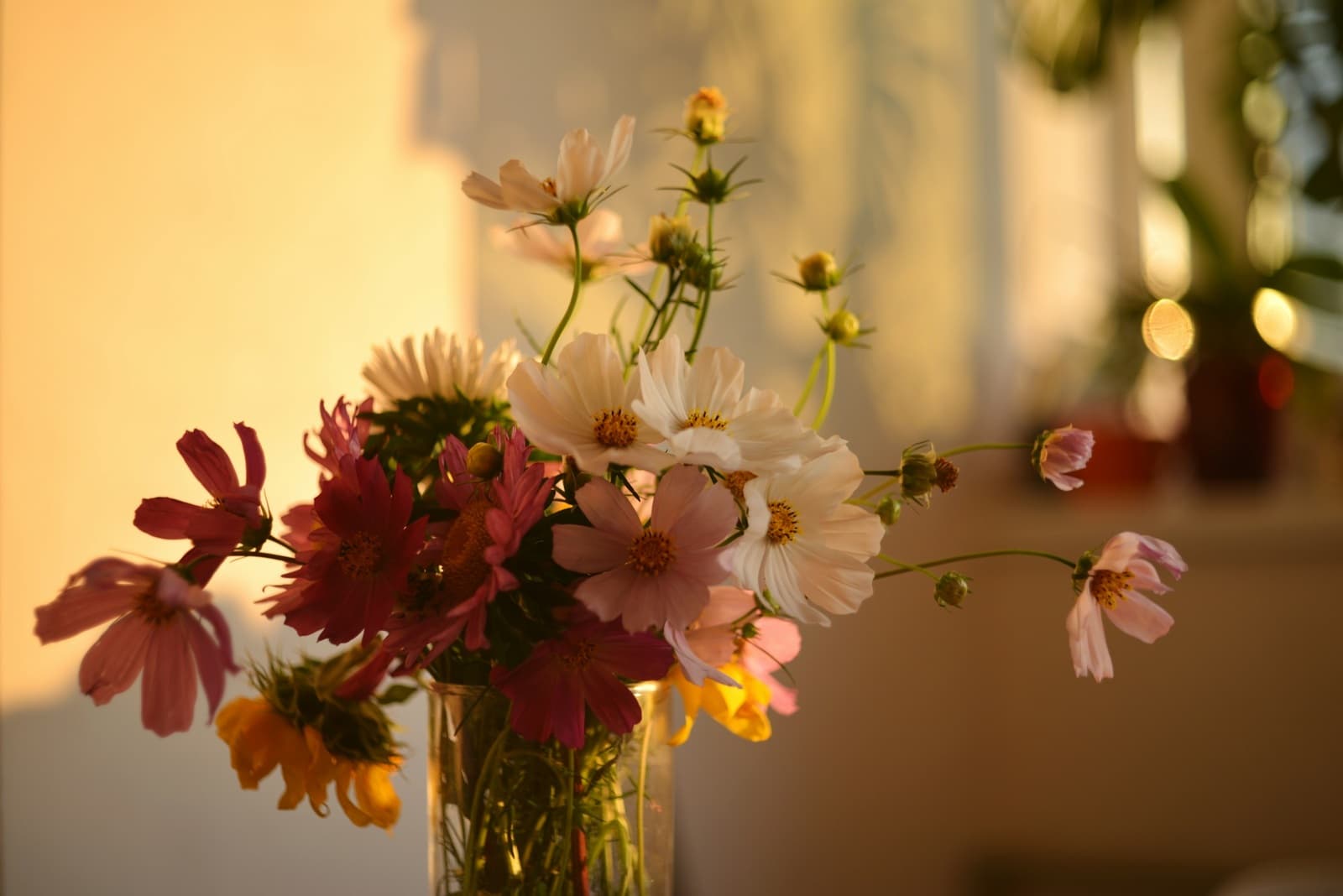
A woman came into the shop last July almost cross with me. Eight years a florist in Bristol and I still hear it weekly: what's wrong with the flowers? Her anniversary bouquet had gone over in three days, heads drooping on the windowsill by the time her husband got home to see them properly. Nothing was wrong with the flowers. The trouble was the windowsill, the fruit bowl beside it, and a vase nobody had topped up since the morning it arrived. Making cut flowers last longer is mostly a matter of spotting what quietly kills them, and almost none of it is the flower's fault.
I tell every customer the same handful of things when they collect an order. None of it is clever. All of it works.
Start with the stem and the water
The first thing to do when you get a bunch home is cut the stems again. Florist scissors or a sharp knife, a clean diagonal cut, taking off two or three centimetres. A stem starts sealing over within an hour of being cut, much the way a small cut on your finger does, and a sealed stem cannot drink. The angle matters too. A flat cut sits square on the bottom of the vase and corks the stem off completely, while a diagonal one keeps it open. Do it under the cold tap if you can, so no air locks into the stem.
Then the water, and here is where most people go wrong. Reach for warm rather than cold. Hand-warm, the temperature you'd run a bath. Warm water holds less air and moves up a stem faster, so a thirsty bunch perks up within the hour. The one exception is bulb flowers. Tulips, daffodils and hyacinths prefer it cold, which is worth knowing if you've a spring bunch on the go.
Strip every leaf that would sit below the waterline. This is the single most important thing on the whole list. A submerged leaf rots within a day, clouds the water, and breeds the bacteria that block the stems of everything else in the vase. Run your thumb and finger down the lower stem and pull the leaves clean off. Your water stays clear for longer, and clear water is living water.
The things that kill flowers faster than you'd think
Keep flowers well away from the fruit bowl. I mean it. Ripening fruit gives off ethylene gas, an invisible little hormone that tells a flower it's time to age and drop. A bowl of bananas and apples next to your roses will finish them off days early, and you'd never connect the two. Carnations and sweet peas are especially touchy about it.
Mind the radiator and the hot sill, too. A vase in direct sun warms through, the flowers drink hard, exhaust themselves, and wilt by teatime. A bunch lasts far longer in the coolest spot in the room, which in most Bristol houses is a hallway or a north-facing windowsill. In summer this matters even more. A vase in a warm front room in July is on borrowed time from the moment you set it down.
Change the water every two days. Don't just top it up. Tip the lot away, rinse any slime off the stem ends, give each stem a fresh diagonal snip and refill with warm water. Three minutes of work, and it can add the better part of a week. I'd skip the sachet of flower food before I'd skip the water change.
Flower food, the real version
That little sachet does three jobs. It feeds the flower a touch of sugar, keeps the water slightly acidic so it travels up the stem, and holds back bacteria. You can make a passable version at home. To a litre of warm water add a teaspoon of sugar, a teaspoon of household bleach and a couple of teaspoons of lemon juice or white vinegar. The sugar feeds, the bleach keeps the water clean, the acid helps the stems drink. Honestly though, if you change the water faithfully every two days, you barely need it. Clean water is most of the battle.
Which flowers actually go the distance
Some flowers are built to last and some are gloriously, fleetingly worth it, and knowing the difference saves a lot of disappointment. Alstroemeria is the workhorse. A good bunch will give you a fortnight, opening bud after bud, and it's one of the best-value stems we sell for exactly that reason. Carnations are the same, far better than their dated reputation, and chrysanthemums will sit happily for two to three weeks if you keep the water fresh.
Then the fleeting ones. Sweet peas might give you four or five days, and they're one of the loveliest things to come out of a British summer, that scent filling a kitchen the moment you walk in. Anemones are similar, quick to go but so beautiful while they're with you. I'd never talk anyone out of them. You just buy them knowing what they are: a short, brilliant pleasure, never a flower to measure by the week. If you want both, a few sweet peas tucked among a longer-lasting bunch gives you the scent now and the colour later.
If you'd like a seasonal bunch picked and conditioned properly before it ever reaches your hands, that's the part of being a Bristol florist I love best, and you can see what's freshest in the shop this week.
The woman from last July came back in September. She'd moved the next bunch to the cool hall, kept it away from the fruit, changed the water on a Tuesday and a Thursday like clockwork. Eleven days, she told me, still going. She said it like she'd got away with something. She hadn't. She'd just stopped fighting the flowers and started listening to them, and they'll always tell you what they need if you let them.